no more are ever minted






Docs
The whole machine, in the order it runs
The object
What a Goob is, and what it is not
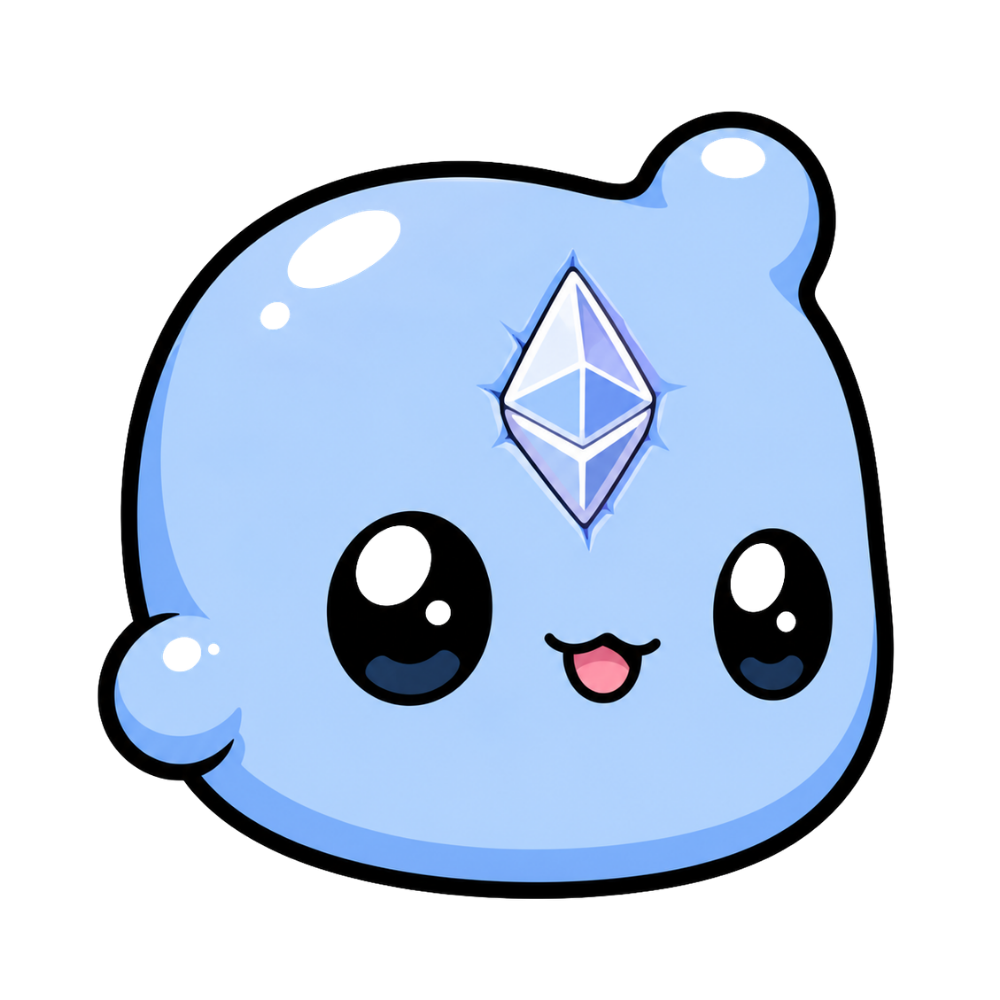
A Goob is an ERC-721 on Robinhood Chain. It is the thing that holds mass, and mass is the only quantity the payout is ever divided by. Everything further down this page follows from that one sentence.
paid in ETH on Robinhood Chain
max Goobs per wallet
max Goobs per mint
no presale and no reserved list
bought on Robinhood Chain, claimed by you
A Goob is not a share in anything. It is not a deposit, not a bond, and not a claim on us. It pays out exactly what $GOOBS trading fees actually bought and nothing else, which can be nothing at all.
How it works
Four steps, and one of them is not yours
3,333 on Robinhood Chain. $3 in ETH.
Burn $GOOBS into your Goob. Burned, not staked.
Swap fees buy SPY and split it by mass.
Take what your Goob collected, any hour.
The flywheel
Where the SPY comes from
$GOOBS is traded. Every trade pays a fee. Half of our share buys SPY for the Goobs that have been fed, half buys $GOOBS back and burns it.
Fee math
Every basis point, accounted for
Pons charges a base fee on every $GOOBS swap and keeps 30% of it. The creator tax on top is a launch argument, not a constant compiled into our contracts. Both are read from one line of source, so this page cannot quote a rate the site does not use.
Where each basis point goes
- Pons base fee
- 1.00%
- Creator tax, chosen at launch
- 1.00%
- Total charged on every trade
- 2.00%
- Kept by the Pons launchpad
- 0.30%
- Reaches the Goobs router
- 1.70%
charged on every $GOOBS buy and every $GOOBS sell.
- 1.70% — credited to the Goobs router
- 0.30% — kept by the Pons launchpad
of what reaches the router.
- 50% — buys SPY for fed Goobs
- 50% — buys $GOOBS and burns it
the SPY pool is shared across fed Goobs in proportion to mass.
- Unfed Goobs get nothing.
- Unclaimed SPY travels with the NFT — but claim within 7 days or it is forfeited.
Every $GOO trade is charged 2.00% in total, of which 1.70% reaches the Goobs fee router. Those are two different numbers and this site will not merge them.
Live
Read from the chain, not from us
A dash means the number could not be read right now. It never means zero — those are different claims and we will not merge them.
mint opens soon
Goobs with any mass at all
the denominator of every share
feed burns and buyback burns, combined
cumulative, since launch
connect a wallet to see yours
Feeding and the cap
Burning $GOOBS is the only way to gain mass
feed(tokenId, amount) takes $GOOBS out of your wallet and sends it to the burn address. Your Goob's mass rises by exactly what arrived there. There is no unfeed, because there is nothing left anywhere to hand back.
feed() moves your $GOOBS to the burn address inside the same transaction.
- Nothing is held on your behalf.
- There is no withdraw and no unfeed.
the most $GOOBS one Goob can ever absorb, in total.
- Lifetime, and keyed to the token id.
- Mass never decays and never resets.
feeding more than a Goob has room for reverts the whole transaction.
- The $GOOBS is already burned when the cap is checked.
- Filling part of it would destroy the remainder.
The cap is the whole reason to own more than one Goob. Without it the mechanic is perfectly linear — one Goob fed twice earns exactly what two Goobs fed once each earn — so a second NFT would buy you nothing. With it, your ceiling is one cap per Goob you hold, and a full Goob is full forever.
roomInGoob(tokenId) returns how much more that Goob can eat, and zero when it is full. The feed box reads it and caps your input before the transaction is ever built.
Mass
Your share is a fraction, not a rate
share = your mass ÷ total mass. Feeding raises the top of the fraction. Everyone else feeding raises the bottom.
your mass÷total mass=your slice of every SPY buy
The five names are labels this site paints on a continuous number. On-chain there are no tiers and no thresholds — only mass and total mass.
Your share moves on its own. A Goob that stops being fed keeps every unit of its mass and still loses share, because other Goobs keep being fed. Feeding is a treadmill, and staying still means going backwards.
No Goob has been fed yet, so there is no denominator and no share to quote.
Claiming
The SPY belongs to the token, not to you
claim(tokenIds) pays out to whoever owns those Goobs when the call executes. That is the single fact behind every answer on this page about selling.
of the token id, at the moment the transaction lands.
- Any hour. There is no lock and no schedule.
- Several Goobs can be claimed in one call.
the ledger is keyed by token id, never by wallet.
- Mass moves with the Goob when you transfer it.
- So does every unit of unclaimed SPY.
the contract takes nothing out of what it pays you.
- Claiming never reduces your mass.
- Unclaimed SPY waits in the vault for 7 days. After that the team can forfeit it — feeding or claiming resets the clock.
Selling a Goob sells its pending SPY with it. Nothing is swept back to your wallet on transfer, and the contract has no function that could do it. If you want that SPY, claim before you list.
Claim within 7 days, or it can be forfeited. SPY left unclaimed on a Goob for a week can be swept to the team wallet. Every feed and every claim restarts that Goob's clock, so staying active keeps you out of reach of it entirely. It can never take your mass — only what was already claimable — and your Goob keeps earning normally afterwards. The countdown is shown on each of your Goobs in the inventory.
SPY that reaches the vault before any Goob holds one whole $GOOBS of mass has no rightful owner yet. It is held and released gradually over 30 days once there is somebody to pay, rather than handed in one lump to whoever fed first.
The contracts
Three contracts, and the one people get wrong
The router is the fee recipient. The NFT is the vault. They are different addresses doing different jobs, and mixing them up is the most common mistake made about this system.
GoobsNFT — the ERC-721, the mass ledger, and where the SPY actually sits.
- Can: mint, take feeds, hold SPY, pay claims.
- Cannot: move SPY anywhere except to a claiming owner.
GooFeeRouter — the address registered as the $GOOBS creator-fee recipient at launch.
- Can: pull the escrow, split it, buy SPY into the vault.
- Cannot: hold SPY, and cannot be replaced after the launch.
GooBurnerCurve — buys $GOOBS with the other half and sends it to 0x…dEaD.
- Has no owner and holds nothing between calls.
- Replaceable, because the $GOOBS venue changes at graduation.
Contract addresses
Only ever interact with the addresses shown here. We will never DM you a different one.
- Goobs NFT
- not deployed yet
- $GOOBS
- not deployed yet
- Fee router
- not deployed yet
- Buyback burner
- not deployed yet
- Burn address
- 0x0000...dEaD
Network and art
Where it runs and what you are holding
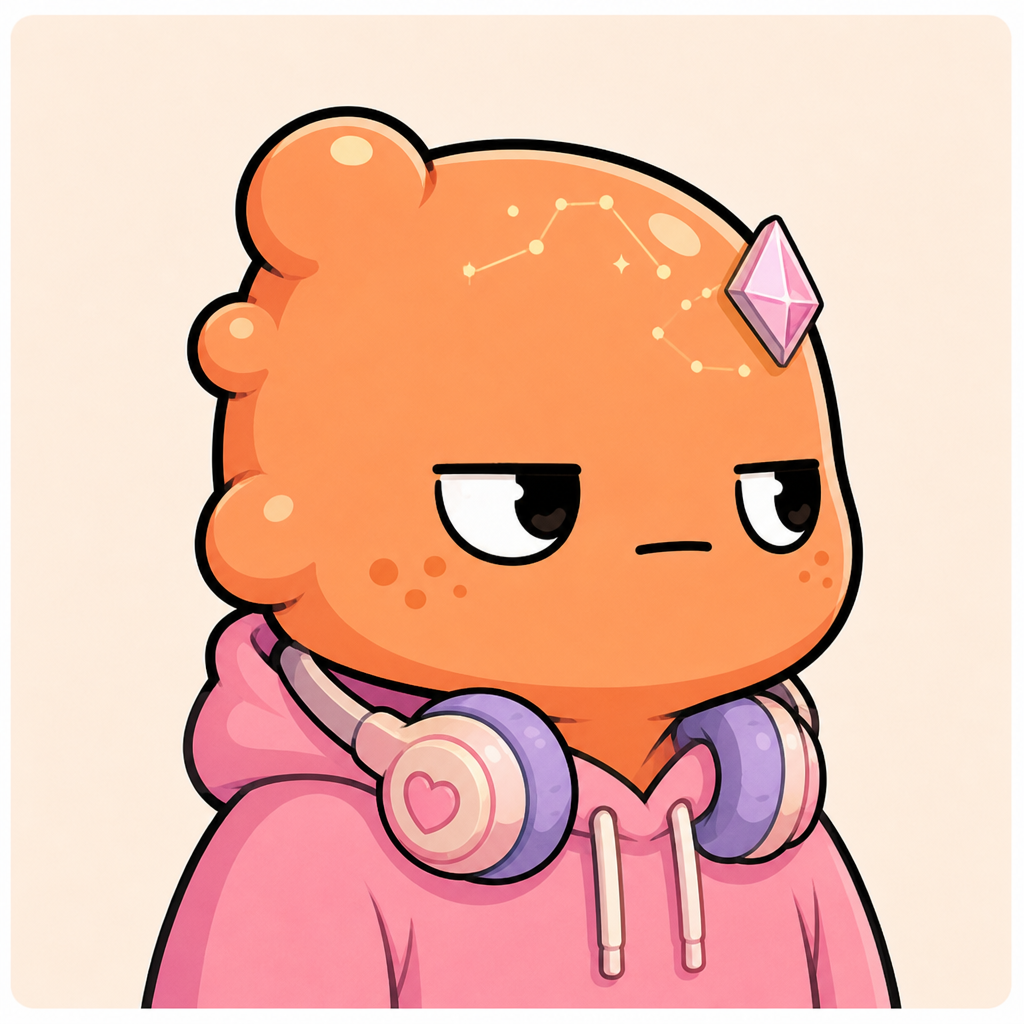
Every Goob image and its metadata are pinned on IPFS. The token URI points at an immutable CID, so the art cannot be swapped out from under you.
Network
- Chain
- Robinhood Chain · 4663
- RPC
- https://rpc.mainnet.chain.robinhood.com
- Block explorer
- robinhoodchain.blockscout.com
- Contract
- mint opens soon
Rarity tiers
- Common
- 60% · 2,000 pieces
- Uncommon
- 24% · 800 pieces
- Rare
- 13% · 433 pieces
- Mythic
- 3% · 100 pieces
ipfs://bafybeihw45qdq2dxkhbyt4jd3vkkjqayxjj33vggr3roc76mncgpgazp5y
Rarity is a property of the artwork alone. It does not change mass, share, or a single unit of SPY — a Mythic Goob with no mass earns exactly what an unfed Common earns, which is nothing.
Owner powers
Everything the owner can do, listed
These are all of them, taken from the contract source and not from a summary of it. Judge the system on this list rather than on a promise about how it will be used.
what the owner of GoobsNFT can change.
- Open and close the mint.
- Re-price the mint to track the $3 peg.
- Move the wallet that receives mint proceeds.
- Change the metadata URI, until freezeMetadata() is called.
- Set a resale royalty, capped in code at 10%.
- Point the contract at $GOOBS once, one way, after the launch.
- Forfeit SPY a Goob has left unclaimed for 7 days — see below.
- Rescue a stray ERC-20, with SPY and $GOOBS excluded in bytecode.
what the owner of GooFeeRouter can change.
- Point the burn leg at a different burner contract.
- Move the SPY leg to another V3 router or fee tier.
- Retune the oracle and size guards, within hard code ceilings.
- Withdraw stuck ETH, and only after two days with no harvest.
fixed in bytecode, with no setter anywhere.
- The SPY address and the burn address.
- The supply, the wallet limit, and the mass cap.
- The fee recipient, which Pons wrote in at launch.
- Ownership itself: renouncing is disabled on both contracts.
The forfeit is a real power over your SPY, so here it is in full. SPY that a Goob has left unclaimed for 7 days can be swept to the team wallet. The clock is per Goob and it restarts every time you feed or claim that Goob, so an active holder is never reachable by it. It can only ever take what is claimable — your mass is principal and stays yours — and the site shows the countdown on every Goob you own.
The owner still cannot touch mass or the accumulator. There is no transfer hook and no path to another holder principal. The power worth watching is setBurner on the router: whoever holds it decides where half of every future fee goes, and no on-chain ceiling can bound that.
Risks
What can go wrong, in full
The same list the home page carries, word for word. A docs page with the shorter version would be the dishonest one.
- Burned is gone. Feeding is not a deposit and there is no withdrawal.
- Your share moves. Others feeding shrinks it without touching your mass.
- Mass and unclaimed SPY belong to the token, not your wallet. Sell the Goob and you sell both.
- Claim within 7 days. SPY left unclaimed for a week can be forfeited to the team — feeding or claiming your Goob resets its clock.
- The fee recipient is set once, at launch, by the Pons launchpad. We cannot change it, and neither can you.
- Smart-contract risk. Bugs and exploits are possible. There is no audit and we will not claim one.
- Nothing here is financial, investment, legal or tax advice.
- The SPY here is a tokenized asset, not a share. It carries no shareholder or fund-holder rights.
- Only interact with the addresses published on this site. We will never message you first.
- Only put in what you can afford to lose.
GOOBS is not affiliated with, endorsed by, or sponsored by Robinhood Markets, Inc., S&P Global or S&P Dow Jones Indices LLC, or State Street Global Advisors (SPDR). SPY and SPDR are their owners' marks and are used here only to name the asset the contract buys.
FAQ
The questions people actually ask
What do I actually get when I mint?
One ERC-721 with zero mass. It earns nothing until you burn $GOOBS into it, and minting alone never pays anything.
When do I get paid?
When a harvest runs and there is SPY to split. There is no schedule and no rate: the pool is only what swap fees actually delivered since the last one.
What if nobody trades $GOOBS?
Then no fees arrive, nothing is bought, and fed Goobs earn nothing. That is the ordinary downside here, not an edge case.
Can you take my SPY?
No. The SPY sits in the NFT contract and the only function that moves it out pays the owner of the token. There is no rescue path and no owner lever over it.
What happens if I sell my Goob?
The buyer receives its mass and its unclaimed SPY along with the NFT. Claim first if you want to keep the SPY.
What if my Goob is full?
It keeps earning on the mass it has, indefinitely. It just cannot take another unit of $GOOBS, and another Goob is the only way to more mass.
Can I get my $GOOBS back?
No. Feeding burns it. There is no staking contract holding it and no function that returns it.
Do the five mass names do anything?
No. They are labels this site paints on a continuous number. The contract has no tiers and never reads a threshold.